
The Enduring Mystery of England’s Lost Royal Heirs
Curioscope’s Lens
History is written by the victors, but mysteries are written by the vanished. The Princes in the Tower aren’t just missing children; they are the ultimate symbol of royal ruthlessness. Their disappearance asks a chilling question: What is the price of a crown? To wear it, must you be willing to sacrifice your own blood? At Curioscope, we delve into this 500-year-old cold case not just to find the bodies, but to understand the darkness that power casts over the human heart.
The year is 1483. The disappearance of the Princes in the Tower, Edward V (12 years old) and his younger brother Richard, Duke of Shrewsbury (9 years old), is one of English history’s most perplexing mysteries. Following the death of their father, King Edward IV, their uncle, Richard, Duke of Gloucester, was declared Lord Protector. The princes were moved to the Tower of London, ostensibly for their safety and preparation for coronation. From their relocation to the Tower, their fate became shrouded in secrecy, sparking centuries of debate.
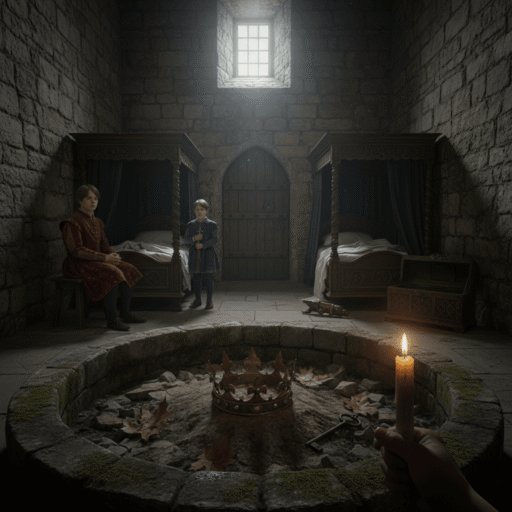
Who was responsible? The most famous suspect, largely due to Shakespeare’s portrayal and Tudor propaganda, is Richard III. He had the most to gain by securing his claim to the throne. However, killing them could have been a significant political blunder. Some theories implicate Henry VII, who faced potential threats from surviving Yorkist claimants after seizing the throne. Margaret Beaufort, Henry VII’s mother, has also been suggested as a possible orchestrator due to her ambition for her son. The historical evidence is inconclusive, complicated by the lack of definitive forensic evidence and biased chronicles of the era.
The Bones in the Tower: A Glimmer of Evidence? In 1674, workmen discovered a wooden chest containing the skeletons of two children buried beneath a staircase in the Tower of London. King Charles II, believing them to be the princes, had them interred in Westminster Abbey. A forensic examination in 1933 suggested the bones belonged to children of the appropriate age but could not definitively confirm their identity or cause of death due to technological limitations (no DNA testing). The Church of England, custodians of the remains, has resisted calls for further scientific analysis, leaving the identification of the bones and the princes’ fate in continued ambiguity.
Editor’s Reflection
The bones under the staircase may well be the princes, or they may be two other unfortunate souls lost to time. Without DNA testing, we are left with ghosts and rumors. Perhaps the true tragedy isn’t just their death, but that their story became a weapon in a propaganda war that has lasted five centuries. Richard III may be innocent, or he may be a monster, but the silence of the Tower keeps his secrets well.
Test Your Knowledge: The Princes in the Tower – Truth or False?
1. Edward V was officially crowned King of England before his disappearance from the Tower of London.
2. Richard III was immediately and universally accused of murdering his nephews by all contemporary chroniclers.
3. The bones found in the Tower in 1674 were conclusively identified as the Princes through 20th-century forensic DNA testing.
Unearthing the Siren’s Secret: The Modern Archaeological Quest for Cleopatra’s Lost Tomb