
The Phoenix of Seoul:
Burning Mystery of Sungnyemun
A 600-year-old gate. A mystical fire shield. And the 69-year-old man who burned it all down with a bottle of paint thinner.
Curioscope’s Lens
In 2008, South Korea watched in live, agonizing horror as its most cherished symbol, National Treasure No. 1, turned into a pillar of fire. Sungnyemun (Namdaemun) was not just a gate; it was the soul of Seoul, a survivor of wars and invasions for over 600 years. But it fell not to a foreign army, but to a single angry old man with a grudge against the government. This is the story of how ancient Feng Shui tried to protect it, how modern bureaucracy failed it, and how a corrupt restoration process left it scarred even after its rebirth. It is a tale of fire, wood, and the fragile memory of a nation.
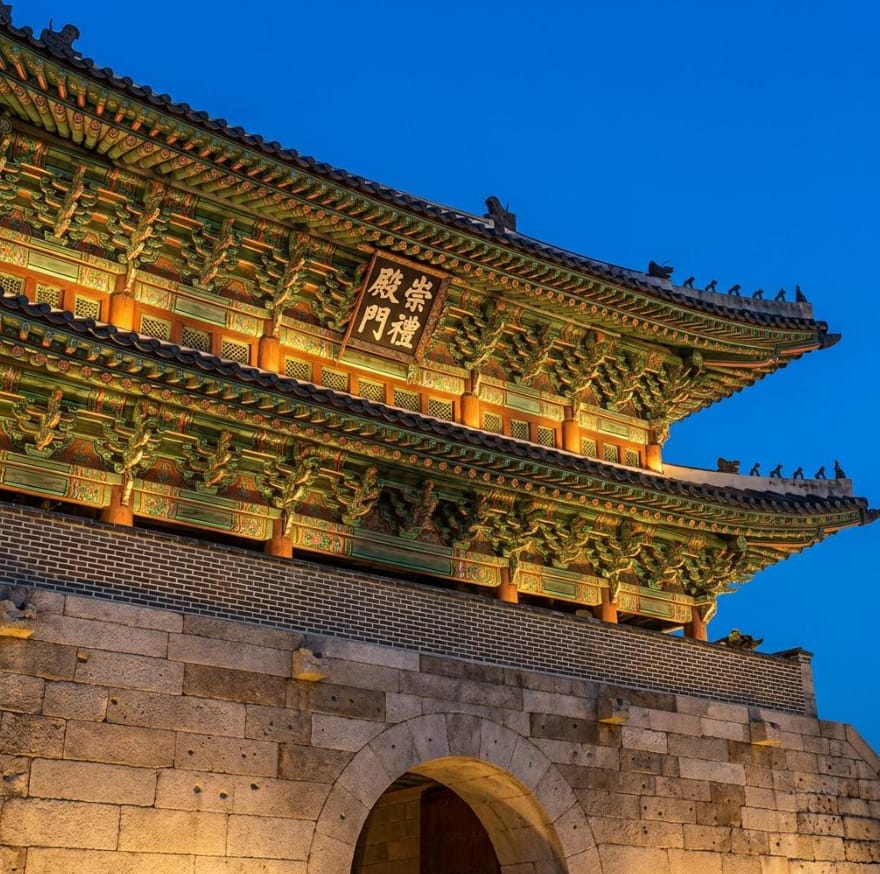
I. The Vertical Flame: Fighting Fire with Fire
When the Joseon Dynasty was founded in 1392, the capital city of Hanyang (Seoul) was designed according to the strict principles of Feng Shui (geomancy). But the royal geomancers spotted a fatal flaw. To the south of the palace lay Gwanaksan Mountain, a jagged peak that resembled a flickering flame. It radiated intense “Fire Energy” (Hwa-gi) that threatened to burn down the Gyeongbokgung Palace.
To counter this metaphysical threat, the southern gate, Sungnyemun (“Gate of Exalted Ceremonies”), was engineered as a mystical shield. If you look closely at the signboard of the gate, you will notice something peculiar. Unlike every other horizontal signboard in the palace, Sungnyemun’s name (崇禮門) is written vertically.
This was not a stylistic choice; it was a magical defense. The vertical characters symbolize a standing flame. By placing a “fire” character vertically, the architects intended to “fight fire with fire,” blocking the energy from the mountain. For 600 years, people believed this talisman protected the city. But in 2008, the fire came not from the mountain, but from within.
II. The Survivor: Scars of War and Colonialism
Sungnyemun has always been a survivor. Built in 1398, it withstood the Japanese invasions of the 16th century. In 1907, during the Japanese colonial period, the fortress walls flanking the gate were torn down to make way for streetcars, leaving the gate isolated like an island in a sea of modernization.
— Seoul Historian
During the Korean War (1950-1953), Seoul was devastated. Buildings crumbled, and the city changed hands four times. Yet, Sungnyemun remained standing, though riddled with bullet holes and shrapnel scars. It became a symbol of Korean resilience. In 1962, the government designated it National Treasure No. 1, cementing its status as the paramount cultural icon of the republic.
III. The Arsonist: One Man’s Rage
The tragedy of 2008 was banal in its origin. Chae Jong-gi, a 69-year-old man, was angry. He felt the government had not paid him enough compensation for a plot of land they expropriated for development. He had previously tried to set fire to Changgyeonggung Palace but failed. This time, he wanted a bigger target.
On the night of February 10, he climbed a ladder to the second floor of the gate’s pavilion. Security was lax; the infrared sensors were mere decorations. He poured paint thinner on the wooden floor and flicked a lighter.
At first, it seemed like a small fire. Firefighters arrived quickly. But they made a fatal miscalculation. They sprayed water on the roof tiles, not realizing the fire was burning underneath the roof structure, in the dry, ancient wood of the eaves. The waterproof layer under the tiles prevented the water from reaching the flames. For five hours, the fire grew silently, eating the heart out of the treasure, until the entire roof collapsed in a shower of sparks, broadcast live to a weeping nation.
IV. The Scandalous Resurrection
The grief was immediate. A “shame barrier” was erected around the ruins. The government vowed to restore it perfectly, using traditional methods. It was to be a 5-year, $25 million project of national redemption. Blacksmiths forged nails by hand; carpenters used traditional adzes instead of power saws.
But the restoration itself became a scandal. The Master Carpenter in charge, Shin Eung-soo, was accused of embezzlement. He allegedly skimmed the high-quality Geumgang pine timber meant for the gate and replaced it with cheaper Russian pine, keeping the good wood for his private projects.
Furthermore, the traditional paint used for the Dancheong (decorative coloring) began to peel and crack within months of the unveiling. It turned out the artisans had used cheap chemical glues and pigments instead of the expensive natural materials they claimed to use. The Phoenix had risen, but its feathers were fake.
V. The Legacy: A Scarred Symbol
Today, Sungnyemun stands again in the center of Seoul. To the casual tourist, it looks majestic. But to those who know, it is a different beast. It is a “replica” built on the ashes of the original.
During the dismantling of the charred ruins, workers found ritual objects hidden in the main ridge beam—inscriptions and coins placed there by the ancestors to ward off bad luck. They had failed. The metaphysical shield of the vertical signboard and the physical shield of the ritual objects could not stop the rage of a single citizen.
The gate is no longer just a relic of the Joseon Dynasty. It is now a monument to modern Korea’s complexity: its rapid growth, its social conflicts, its bureaucratic corruption, and its undying will to rebuild, no matter the cost.
Trial by Fire: True or False
Test your knowledge of the tragedy.
Editor’s Reflection
I remember watching the news that night in 2008. There was a collective sense of disbelief. How could something that survived 600 years—through invasions, colonialism, and war—be destroyed in a few hours by a plastic bottle of paint thinner? It felt like watching a grandparent die from a common cold. It was absurd, preventable, and deeply tragic.
But as the smoke cleared and the scandals of the restoration emerged, a darker realization set in. We weren’t just mourning wood and stone. We were mourning our own integrity. The fake wood, the peeling paint, the embezzlement—it felt like a betrayal of the ancestors we claimed to honor. We wanted the gate back so badly that we rushed it, faked it, and sold it out.
Sungnyemun is beautiful again, yes. But it is a beauty with a scar. When I look at it now, I don’t see the invincible shield of the Joseon Dynasty. I see a fragile old survivor, wearing a new coat of paint to hide its burns. It reminds us that heritage is not something you inherit once and keep forever; it is something you must earn, protect, and be worthy of, every single day.
Curioscope invites you to ask: When we restore a monument, are we healing history, or are we just covering up our own failures?