
The Frog Boys Case: South Korea’s Enduring Cold Case
Curioscope’s Lens
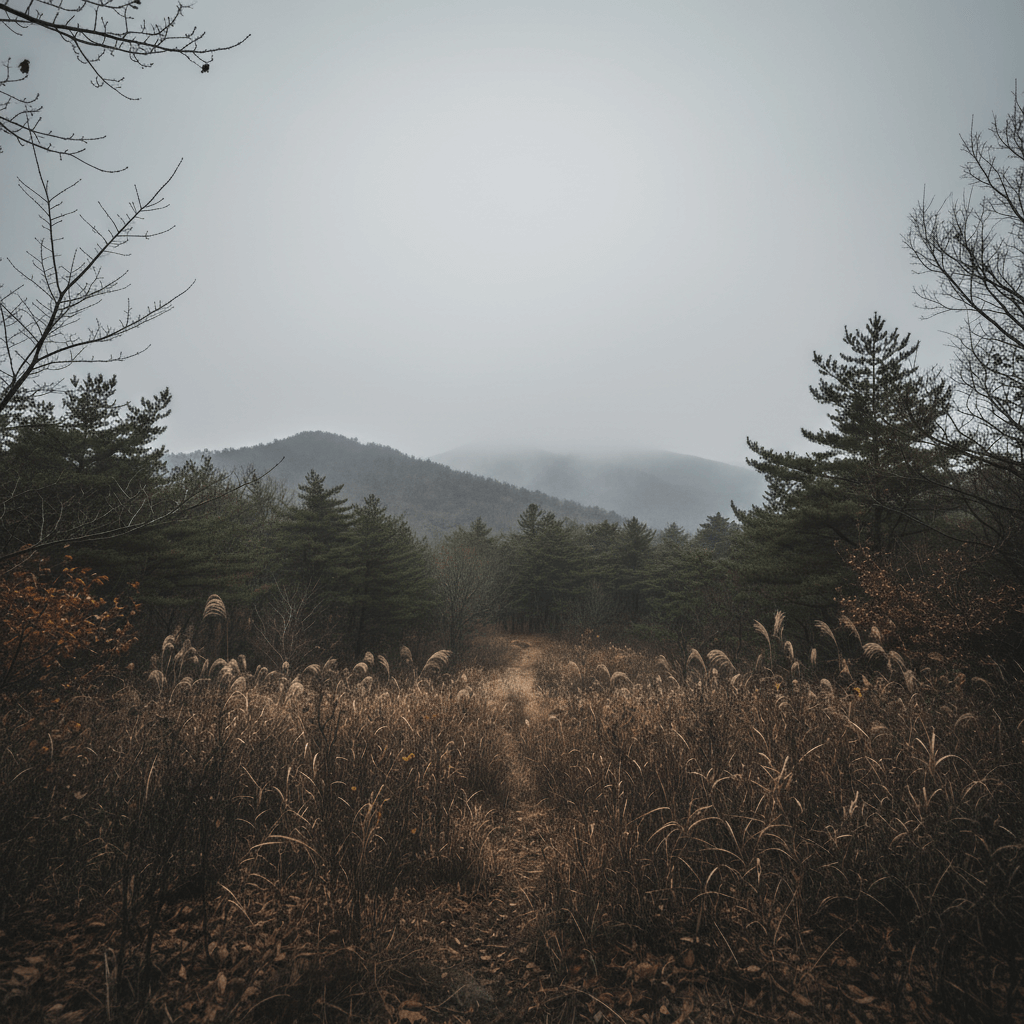
The “Frog Boys” case is more than a mystery; it is a national scar on South Korea’s psyche. It represents the ultimate parental nightmare: a sunny holiday, a group of friends, and a disappearance into thin air. At Curioscope, we are struck by the disconnect between the official “accidental” verdict and the physical evidence of trauma. This story forces us to ask: When institutions fail to protect the vulnerable, how do we find the truth? Sometimes, the silence of a mountain speaks louder than any police report.
The “Frog Boys” case, officially known as the “Waryongsan Disappearance of Five Elementary School Students” (대구 와룡산 5소년 실종 사건), is one of South Korea’s most haunting and unresolved cold cases, symbolizing elusive justice and profound national anguish. Despite official conclusions, persistent anomalies and alternative theories continue to challenge the accepted narrative.
The Fateful Morning of March 26, 1991
- Date: Tuesday, March 26, 1991.
- Location: Dalseo-gu district, Daegu, South Korea.
- Victims: Five elementary school boys:
- Woo Cheol-won (13)
- Jo Ho-yeon (12)
- Kim Yeong-gyu (11)
- Park Chan-in (10)
- Kim Jong-sik (9)
- Activity: The boys set out from Seongseo-gu to catch frogs and salamanders on Mount Waryong (와룡산).
- Initial Response: Parents initially unconcerned, but growing dread as the boys failed to return.
- Massive Search: An unprecedented civilian and police effort involving tens of thousands of officers, soldiers, and volunteers scoured Mount Waryong and surrounding areas. Helicopters, sniffer dogs, and extensive ground searches were deployed.
- Outcome: The boys vanished without a trace, leaving no immediate clues. The initial investigation yielded no answers.
The Agonizing Decade of Silence (1991-2002)
- Duration: Eleven years of agonizing uncertainty for the families.
- Public Impact: The case became a national obsession, fueling public fear regarding child safety and highlighting investigative limitations.
- Government Response: A substantial reward was offered for information, but no credible breakthroughs occurred.
- Families’ Dedication: Parents quit jobs, dedicated lives to the search, and made public pleas, never abandoning hope of their children being alive.
- Theories: Abduction, cult involvement, accidental falls, or encounters with wild animals were speculated, but remained unproven due to lack of evidence.
Discovery of Remains and Renewed Controversy (September 26, 2002)
- Discovery: Human remains were found by a resident searching for acorns on Mount Waryong, near a military firing range previously searched.
- Confirmation: Forensic examination confirmed the remains belonged to the five missing boys.
- Impact: The discovery brought shock but not closure, sparking new controversy and deeper questions.
The Official Narrative vs. Foul Play
- Official Conclusion: The Daegu Dalseo Police Station concluded the boys died of hypothermia after getting lost, an accidental death.
- Skepticism and Contradictions: This explanation was met with widespread skepticism due to several critical inconsistencies:
- Discovery Location: Bodies found in a low-altitude area of Mount Waryong, supposedly searched multiple times. This raised questions about the thoroughness of earlier searches or potential body relocation.
- Clothing and Positioning: Boys were partially clothed, with some garments oddly removed or tied in knots, inconsistent with dying from exposure. One boy’s pants were reportedly found inside out.
- Blunt Force Trauma: Forensic examination of several skulls revealed evidence of blunt force trauma, including fractures, suggesting external force rather than accidental death.
- Lack of Animal Predation: Skeletal remains showed remarkably few signs of significant animal predation after eleven years, suggesting possible protection or initial burial/concealment.
- Weaponized Objects: Rocks and potential weapons were reportedly found near the bodies, though their direct link was not definitively established.
- Public Outrage: The swift official conclusion was perceived as an attempt to close an embarrassing cold case, leading to public outrage and mistrust. Families vehemently rejected the accidental death theory.
Dissecting the Evidence and Expert Disagreements
- Evidence of Violence: Forensic anthropologist Dr. Hwang Gyeo-jeong re-examined the remains, identifying skull fractures on at least two boys, strongly indicating murder by blunt object. The peculiar state of clothing further supported human intervention.
- “Bullet Fragment” Controversy: A disputed bullet fragment found in one skull was linked to the nearby military firing range, fueling speculation but not definitively proving cause of death.
- Incomplete Investigation: Critics argued the initial investigation after the discovery was rushed, with potential mishandling or overlooking of crucial evidence. The failure to adequately secure the scene and dismiss forensic anomalies contributed to the perception of a flawed process.
- Expert Disagreements: Forensic experts offered conflicting conclusions, with some supporting the accidental death theory and others, like Dr. Hwang, strongly advocating for murder. This debate highlighted the challenges of interpreting aged evidence and further eroded public trust.
Public Fascination and Media Scrutiny
- Cultural Impact: The case has remained a fixture in South Korean popular culture, inspiring documentaries, books, and the critically acclaimed film “Children…” (아이들…, 2011).
- Media Role: Media portrayals often highlight investigative flaws, theories of foul play, and the families’ suffering, ensuring the case is not forgotten and holding institutions accountable.
Lesser-Known Hypotheses and Speculative Theories
- Witnessing a Crime/Activity: The boys may have inadvertently witnessed illicit activities (poaching, clandestine meetings, crimes) and were silenced.
- Rogue Hunter/Poacher: Encounter with a hunter or poacher who reacted violently, possibly in panic or rage.
- Mentally Disturbed Individual: Victims of a random act of violence by a psychopath or serial offender.
- “Cover-up” and Institutional Failures: A pervasive belief that authorities deliberately downplayed foul play due to incompetence, embarrassment, or a desire for a simpler explanation.
- Relocated Bodies: The boys may have been killed elsewhere and their bodies moved to Mount Waryong later to conceal the crime.
Legal Battle and Statute of Limitations
- Original Statute: South Korea’s murder statute of limitations was 15 years. For the Frog Boys, this meant the case would expire in March 2006.
- Expiration: The statute of limitations expired in March 2006 without any suspect being identified or charged, legally closing the prosecution avenue.
- 2015 Legislative Change: The “Taewan Law” abolished the statute of limitations for first-degree murder cases, retroactively applicable to cases not yet expired.
- Impact on Frog Boys: The law came too late for the Frog Boys, as their statute had already expired. While the investigation technically remains open as a cold case, no one can now be legally charged or convicted.
The Human Cost and Enduring Search for Justice
- Devastating Impact: Five young lives were lost, and five families endured a lifetime of grief and an unresolved mystery.
- Legacy: The case embodies fears for child safety, limitations of justice systems, and the human struggle for closure.
- Social Wound: It remains a profound social wound, compelling reflection on vulnerabilities, state responsibilities, and the courage of families.
- Inspiration for Reform: The case, along with others, influenced the abolition of the statute of limitations for murder, a painful but significant legacy.
- Unanswered Questions: The core truth of what happened on Mount Waryong remains obscured, a testament to the enduring power of unresolved mysteries and the persistent plea for answers.
Editor’s Reflection
The statute of limitations may have run out, but the search for truth has no expiry date. The Frog Boys didn’t just get lost; they were taken, and then they were failed—first by the perpetrator, and then by a system that wanted a quick resolution. This case remains open in our hearts not because we expect an arrest, but because remembering them is the only form of justice left. It is a somber reminder that in the face of indifference, memory is an act of resistance.
Declassified CIA Exploration of Consciousness: The Gateway Process