
Unveiling the Enigma
A Deep Dive into UFOs, UAPs, and Humanity’s Enduring Fascination
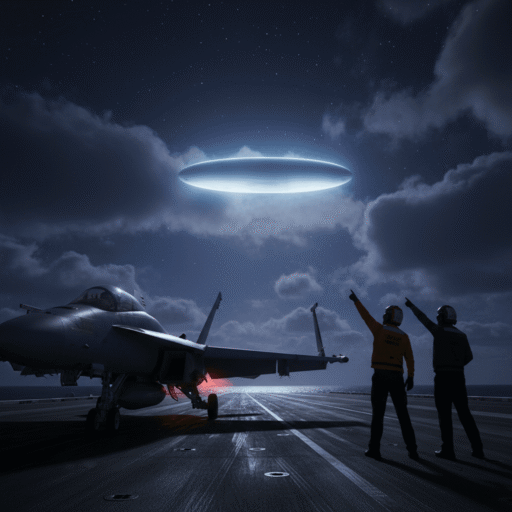
Curioscope’s Lens
Are we alone? It is perhaps the most profound question a human being can ask. Whether you believe UAPs are visitors from another world, advanced military tech, or atmospheric anomalies, the fascination they evoke is universal. It forces us to look up from our screens and acknowledge that for all our knowledge, the universe still holds secrets that can humble us. At Curioscope, we explore these phenomena not to prove a conspiracy, but to celebrate the enduring human capacity for wonder.
I. The Dawn of the Phenomenon: From Ancient Skies to Modern Sightings
Diverse cultures throughout history have chronicled perplexing aerial events, interpreted through spiritual or mythological lenses (e.g., Egyptian hieroglyphs, Roman chroniclers, medieval texts). These are often dismissed as misinterpretations of natural phenomena.
Modern Era Begins (1947):
Kenneth Arnold Sighting (June 24, 1947): Pilot Kenneth Arnold reported seeing nine shiny objects flying at high speeds near Mount Rainier, Washington. He described their movement as “like saucers skipping over water.” A reporter coined the term “flying saucers,” though Arnold insisted the objects were crescent-shaped.
Roswell Incident (July 1947): Rancher W.W. Brazel discovered metallic debris near Roswell, New Mexico. The Roswell Army Air Field (RAAF) initially announced recovery of a “flying disc” but quickly retracted, stating it was a weather balloon. This fueled suspicion of a government cover-up, with later claims of extraterrestrial spacecraft and alien bodies. The official explanation evolved to a top-secret Project Mogul balloon. Roswell solidified public belief in government secrecy regarding UFOs.
The proliferation of sightings globally marked the beginning of the Unidentified Flying Object era.
II. Government Scrutiny and Public Skepticism: The Cold War Era and Beyond
The surge in sightings led to formal government investigations due to national security concerns.
Project Sign (1948):
U.S. Air Force project to assess UFO threat. Concluded some UFOs were genuine, unknown aerial objects with controlled flight, and speculated about extraterrestrial origins for a small percentage. This conclusion was rejected by high-ranking officials.
Project Grudge (1949):
Took a dismissive stance, asserting UFOs were misidentifications, hoaxes, or psychological phenomena. Criticized for perceived bias.
Project Blue Book (1952-1969):
The most famous and longest-running Air Force study, based at Wright-Patterson Air Force Base.
- Objectives: Investigate, analyze, debunk/explain UFO sightings; determine security threats; identify exploitable advanced technology.
- Data: Analyzed 12,618 reports.
- Conclusions: 701 cases (approx. 5.5%) remained “unidentified.” The final report, influenced by the Condon Report, concluded no evidence of extraterrestrial visits, security threat, or advanced technology.
- Dr. J. Allen Hynek: Scientific advisor for Project Blue Book, whose views evolved significantly. He later developed the “Close Encounters” classification system.
Project Blue Book’s legacy is complex, contributing data but also cementing perceptions of government cover-ups and dismissiveness.
III. Categorizing the Unknown: Types of UFO Sightings and Their Characteristics
Dr. J. Allen Hynek’s Classification System:
- Nocturnal Lights (NL): Distant lights in the night sky (most common, often aircraft, satellites, astronomical objects).
- Daylight Discs (DD): Daytime sightings of metallic, disc-shaped, or cigar-shaped objects with unusual flight characteristics.
- Radar/Visual Reports (RV): Objects detected simultaneously by radar and visual observation (considered more credible due to corroboration).
Hynek’s “Close Encounters” Scale:
- Close Encounters of the First Kind (CE1): Visual sighting of a UFO at close range (within 500 feet) without physical interaction.
- Close Encounters of the Second Kind (CE2): UFO sighting leaving physical evidence (e.g., burnt ground, electromagnetic interference, physiological effects, animal behavior disruption).
- Close Encounters of the Third Kind (CE3): UFO sighting accompanied by observation of “occupants” or “entities.”
Further Proposed Categories:
- Close Encounters of the Fourth Kind (CE4): Abduction or forced interaction with alien beings.
- Close Encounters of the Fifth Kind (CE5): Intentional human-initiated contact with extraterrestrial intelligence.
Commonly Reported Characteristics:
- Shapes: Discs, triangles/deltas, cigars/cylinders, spheres/orbs.
- Behaviors: Incredible speeds, instantaneous turns, hovering silently, rapid acceleration, “tic-tac” movements.
- Other: Lack of visible propulsion, strange lights (red, green, white), silent operation, electromagnetic effects (power outages, compass malfunctions, radio interference).
IV. Explaining the Unexplained: Conventional Theories and Skeptical Perspectives
- Misidentification of Conventional Aircraft: Commercial airliners, military jets, drones, helicopters, experimental planes, surveillance aircraft, stealth bombers.
- Astronomical Objects: Bright planets (Venus, Jupiter), meteors, fireballs, re-entering space debris, satellites, International Space Station.
- Natural Atmospheric Phenomena: Lenticular clouds, ball lightning, plasma phenomena, exotic weather conditions.
- Psychological and Perceptual Factors: Pareidolia (pattern recognition), mass hysteria, social contagion, confirmation bias.
- Hoaxes and Pranks: Elaborate jokes, video manipulations, fabricated stories.
Skepticism is crucial for eliminating known possibilities before concluding something is truly anomalous.
V. The Extraterrestrial Hypothesis (ETH): Is Anyone Out There?
Core Argument:
A fraction of unexplained phenomena represent craft or probes from extraterrestrial civilizations.
Pillars of the ETH:
- Scale of the Universe: Vast number of stars and galaxies suggest life beyond Earth is probable. Discovery of exoplanets in habitable zones supports this.
- Anomalous Characteristics: Reported UAP behaviors (e.g., transmedium travel, instantaneous acceleration, hypersonic velocity without sonic boom, low observability, positive lift without apparent propulsion) defy current human aeronautical capabilities.
Hurdles for ETH:
- Fermi Paradox: “Where is everybody?” If intelligent life is common, why no definitive signs?
- Lack of Conclusive Evidence: No unambiguous physical evidence has definitively proven extraterrestrial origin.
- Occam’s Razor: Terrestrial explanations are favored until compelling evidence dictates otherwise.
- Interstellar Travel Challenges: Immense energy and technological requirements.
Scientific Shift: NASA and other organizations are increasingly open to the search for extraterrestrial life. The ETH for specific sightings remains controversial but the broader question is a serious domain of astrobiological research.
VI. Cultural Impact and Media Representation: UFOs in Art, Film, and Literature
Early Sci-Fi (1940s-1950s):
Reflected Cold War fears (e.g., The Day the Earth Stood Still, War of the Worlds). Established tropes like disc shapes and ray guns.
Evolving Depictions:
- Close Encounters of the Third Kind (1977): Hopeful vision of first contact, emphasizing communication and wonder.
- E.T. the Extra-Terrestrial (1982): Empathetic portrayal, exploring friendship.
1990s Resurgence:
- The X-Files (1993-2002): Popularized government conspiracy, paranormal investigation, and the “The Truth Is Out There” tagline.
- Independence Day (1996): Grand-scale alien invasion narrative.
Literature: Authors from H.G. Wells to Arthur C. Clarke explored alien life and contact.
Other Media: Comic books, video games, and music have integrated UFO themes.
Conspiracy Theories: Area 51 became synonymous with alleged alien spacecraft storage.
UFOs serve as powerful metaphors for curiosity, hopes, fears, and humanity’s place in the universe.
VII. A New Era of Transparency? UAPs and Declassification Efforts
Shift in Discourse:
From dismissal to serious inquiry, driven by credible military witnesses and government acknowledgment.
Turning Point (December 2017):
The New York Times published articles detailing the Advanced Aerospace Threat Identification Program (AATIP), including declassified U.S. Navy videos (“FLIR1,” “GIMBAL,” “GOFAST”) showing UAPs with extraordinary capabilities.
Navy Pilot Testimonies:
Commanders David Fravor and Lieutenant Commander Alex Dietrich described “tic-tac” shaped objects exhibiting impossible maneuvers, tracked by radar and observed by trained pilots (e.g., USS Nimitz 2004, USS Theodore Roosevelt 2015-2017).
Government Actions:
- Pentagon officially released Navy UAP videos in 2020, acknowledging authenticity.
- Creation of Unidentified Aerial Phenomena Task Force (UAPTF), later Airborne Object Identification and Management Synchronization Group (AOIMSG), and now the All-domain Anomaly Resolution Office (AARO) to standardize reporting, collect data, and mitigate threats.
Office of the Director of National Intelligence (ODNI) Preliminary Assessment (June 2021):
Acknowledged 144 UAP reports from U.S. government sources (2004-2021), with only one identified (a deflating balloon). Many lacked sufficient data for explanation, and some demonstrated advanced capabilities. Called for further data collection and analysis.
Subsequent reports (2022, 2023) detailed increased sightings and emphasized the need for scientific investigation and elimination of reporting stigma.
This new era signifies government acknowledgment, validation of witness accounts, and resource allocation for study, moving the conversation towards open inquiry.
VIII. The Future of UAP Research: Science, Skepticism, and the Search for Truth
Key Needs:
- Standardization of Reporting and Data Collection: Clear, accessible, stigma-free channels for reporting, accompanied by multi-source data (imagery, radar, infrared, electromagnetic signatures, positional data). AARO is a step towards this.
- Scientific Community Engagement: Physics, aerospace engineering, optics, atmospheric science, and AI will be crucial. Development of new instruments, advanced data analytics, and controlled experiments. Independent scientific organizations and university programs are needed.
- Citizen Science: Platforms for submission and collaborative analysis of data from amateur observers, with robust debunking methods.
Balanced Approach:
- Skepticism: Essential for rigorous vetting of all conventional explanations (misidentification, natural phenomena, terrestrial technology, hoaxes) before considering exotic hypotheses.
- Open-mindedness: Avoiding dismissal without investigation and allowing empirical evidence to guide conclusions.
Potential Implications of Identification:
- Advanced Terrestrial Technology: Reveals breakthroughs by rival nations or clandestine programs.
- Unknown Natural Phenomena: Opens new fields of scientific discovery.
- Extraterrestrial Origin: The most profound discovery in human history, altering understanding of life, intelligence, and our place in the cosmos.
The journey to UAP truth will be long and complex, requiring sustained effort, interdisciplinary collaboration, and a commitment to empirical evidence.
True or False Quiz
1. Project Blue Book concluded that a significant portion of UFO sightings represented genuine extraterrestrial spacecraft.
2. The term “flying saucers” was coined by a newspaper reporter based on Kenneth Arnold’s description of objects he saw moving like saucers skipping over water.
3. The U.S. government, through offices like AARO, has officially acknowledged and begun investigating Unidentified Aerial Phenomena (UAPs).
The Buzzer’s Enigma: Unraveling the 40-Year Mystery of UVB-76, Russia’s Ghost Radio