
The GameStop Saga: A Financial Revolution
Curioscope’s Lens
The GameStop saga represents a glitch in the Matrix of modern finance. It wasn’t just about profit; it was a collective scream against a rigged system. When a subreddit can bring Wall Street to its knees using memes as ammunition, we have to ask: Is the stock market a measure of value, or just the world’s most expensive casino? This event didn’t just change portfolios; it changed the psychology of power.
The GameStop short squeeze in 2021 is described as an unprecedented financial spectacle and a cultural phenomenon, a David-and-Goliath story that exposed systemic fissures, challenged market efficiency, and ushered in an era of retail investor power amplified by social media.
It’s characterized as a financial revolution prompting regulatory reviews and altering perceptions of finance, technology, and community.
Understanding Short Selling and Market Mechanics
Short Selling: A strategy where investors borrow shares, sell them, and aim to buy them back at a lower price to profit from the decline.
- Mechanism: Borrow shares, sell on market, buy back later, return shares. Profit = Sale Price – Buyback Price – Fees.
- Risk: Theoretically unlimited potential loss if the stock price rises.
Hedge Funds: Primary practitioners of large-scale short selling, identifying fundamentally weak or overvalued companies.
Key Metrics
- Public Float: Shares available for public trading.
- Short Interest: Percentage of shares sold short. High short interest creates a precarious situation.
Short Squeeze: Occurs when a rising stock price forces short sellers to buy back shares to limit losses, further driving up the price.
Related Concepts: Naked short selling (largely illegal) and dark pools (private trading venues for institutions) are mentioned as contributing to suspicion.
GameStop’s Decline and the Rise of r/wallstreetbets
GameStop (GME): A brick-and-mortar video game retailer in decline due to digital downloads and online retail, making it a target for short sellers.
r/wallstreetbets (WSB): A Reddit subreddit known for aggressive, meme-driven trading, characterized by “YOLO” trades, “diamond hands” (holding despite volatility), and “tendies” (profits). Its users are predominantly young, self-taught retail investors.
Keith Gill (“Roaring Kitty” / “DeepF***ingValue”): An influential figure on WSB who presented a deep-value investment thesis for GME, believing it was undervalued and had turnaround potential.
Catalyst: Gill’s analysis and the community’s realization that GME was heavily shorted (short interest exceeding 100% of float at times) created a volatile situation ripe for a squeeze.
The Ignition: From Meme Stock to Market Mayhem
Collective Action: Throughout late 2020 and early January 2021, WSB users encouraged buying and holding GME, viewing it as a challenge to institutional elites.
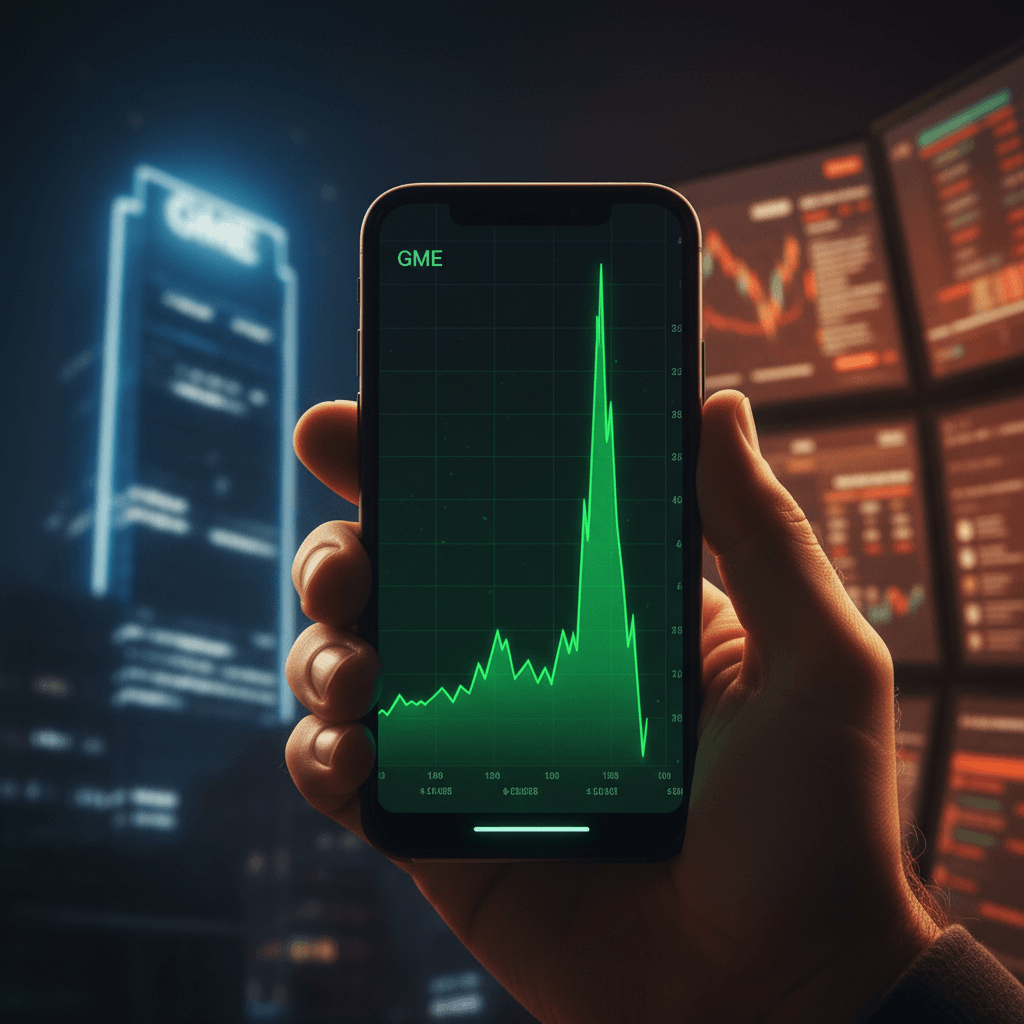
The Squeeze Begins (January 2021): GME’s price started rising, increasing pressure on hedge funds like Melvin Capital with large short positions.
- Buying by short sellers to cover losses further drove up the price, creating a feedback loop with retail buying.
- The stock price surged from around $17 to over $100 rapidly.
The Climax: By late January, GME peaked near $483 per share. Melvin Capital required a $2.75 billion bailout from Citadel and Point72. The event was characterized by extreme volatility and disbelief as retail traders appeared to challenge sophisticated institutions.
Test Your Knowledge: GameStop Saga Quiz
The Fallout: Robinhood, Regulation, and the “Meme Stock” Era
Robinhood’s Trading Restrictions (January 28, 2021): Robinhood and other brokers restricted buying of GME and other “meme stocks,” leading to accusations of market manipulation to protect hedge funds.
- Brokers cited unprecedented volatility and increased collateral requirements from clearinghouses as reasons.
- This caused a crisis of trust and led to congressional hearings and lawsuits.
Regulatory Scrutiny: The SEC monitored the situation, sparking debates on market manipulation and the challenges of regulating social media-driven collective action.
- Calls for increased transparency, better short selling oversight, and review of payment for order flow (PFOF) emerged.
Birth of “Meme Stocks”: The phenomenon spawned “meme stocks” (e.g., AMC, BlackBerry, Dogecoin), where social media sentiment heavily influences stock prices, introducing unpredictability for institutional investors.
The Aftermath and Lasting Legacy
GameStop’s Status: GME’s stock price retreated but remained elevated. The company raised capital and is undergoing a strategic transformation towards e-commerce, technology, NFTs, and digital gaming under Ryan Cohen.
Hedge Funds and Retail Investors: Melvin Capital closed in May 2022. Retail investor outcomes were mixed, with some profiting significantly and others incurring losses by buying at the peak. The saga highlighted risks of speculative trading and herd mentality.
Democratization of Finance vs. Casino: The event is viewed by some as democratizing finance by empowering retail investors, while critics see it as casino-like speculation.
Lessons for Regulators and Market Participants
- Regulators: Exposed market infrastructure vulnerabilities and the need for updated frameworks for financial technology and social media influence.
- Institutional Investors: Demonstrated that organized retail investors cannot be ignored.
- Retail Investors: Provided a lesson in market volatility, risk management, and collective action, emphasizing individual research.
Future of Investing: The rise of retail investing, accessible platforms, and social media’s role in financial information dissemination are permanent trends. Future market events will likely involve similar interactions between institutional and retail investors. The concept of a “fair and efficient market” and market manipulation definitions have become more complex.
Conclusion: A Paradigm Shift
The GameStop short squeeze is presented as a cultural flashpoint reflecting societal discontent with established power structures.
It showcased the power of networked communities, revealed financial system intricacies, and ignited global conversations on market fairness, access, and regulation.
The saga forced re-evaluation by both Main Street and Wall Street, leaving a legacy of market unpredictability, technological disruption, and the potential for challenging established powers. It marked a paradigm shift, demonstrating that a humble retailer could become the epicenter of a financial revolution.
Editor’s Reflection
While the dust has settled, the GameStop saga is far from over. It serves as a reminder that the “smart money” isn’t always smart, and the “dumb money” isn’t always dumb. The game has changed, and the players are no longer just the ones in suits. The next revolution might not be televised, but it will certainly be tweeted, posted, and meme-ified.