
Lake City
Quiet Pills
It started with a Reddit post about a dead moderator. It ended with a trail of encrypted HTML, hitmen, and a murder in a Dubai hotel.
Curioscope’s Lens
The internet is a vast ocean, and sometimes, things float to the surface that hint at the monsters swimming in the deep. “Lake City Quiet Pills” is perhaps the most chilling example of this. On the surface, it appeared to be an image hosting site for a Reddit community. But beneath the HTML lay a hidden world of coded messages, job offers for mercenaries, and logistical details that eerily matched real-world assassinations. Is it the greatest Alternate Reality Game (ARG) ever played? Or did a group of internet sleuths accidentally stumble upon a digital watering hole for private military contractors? We pull the thread on the web’s darkest tapestry.
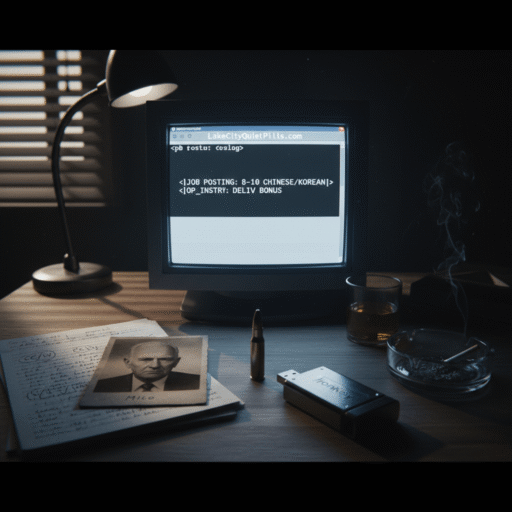
Part I: The Death of ReligionOfPeace
The story begins innocuously enough on July 17, 2009. A Reddit user named u/2-6 posted a eulogy for a power-user known as u/ReligionOfPeace (often referred to as Milo). Milo was a controversial figure, a moderator of questionable subreddits, but deeply respected by a small circle of veterans.
The eulogy claimed Milo was a 79-year-old veteran who had passed away. It seemed like a standard internet memorial until users started digging into Milo’s digital footprint. They found a website he ran: LakeCityQuietPills.com.
At first glance, it was a broken image hosting site, likely used for sharing pornographic material. But the name itself was a grim red flag. “Lake City” refers to the Lake City Army Ammunition Plant, the largest producer of small-arms ammo for the US military. “Quiet Pills” is slang for bullets. The website’s name literally translated to “Military Grade Bullets.”
Part II: The Code in the Source
When curious users viewed the page source (HTML code) of the website, they found something that shouldn’t have been there. Buried deep within the code were not image tags or scripts, but messages. Diaries. Job postings.
This wasn’t a chat room. It was a bulletin board hidden in plain sight. The messages used military jargon (“sequester,” “op,” “deliv bonus”). They spoke of “bricking IronKeys”—military-grade encrypted USB drives that self-destruct if tampered with. This detail alone sent shivers down the spines of readers; in 2009, IronKeys were expensive, niche tools used primarily by government agencies and defense contractors.
The “job offers” were chillingly specific. They weren’t asking for coders or designers; they were asking for people fluent in specific dialects, willing to travel, willing to disappear. It looked, for all the world, like a hiring hall for mercenaries.
Part III: The Dubai Assassination
The mystery exploded from a curiosity into a potential criminal investigation with a single message found in the code in early 2010.
The Smoking Gun?
“we got 38 rooms in the marriot on 46. shade has the key cards for locals (pick up at the party). give your travel name to the desk and that’s it. no id needed since were covering the bill. keep the room service under 500, okay? the phones there are not secure.”
Internet sleuths immediately began cross-referencing news events. On January 19, 2010, Mahmoud al-Mabhouh, a co-founder of the military wing of Hamas, was assassinated in his hotel room in Dubai.
The details were unnervingly consistent. The assassination was carried out by a large team (estimates ranged from 11 to 33 operatives) using fake European passports. They used prepaid credit cards. They coordinated via encrypted communications. And crucially, while al-Mabhouh was killed in the Al Bustan Rotana hotel, the operational hub was suspected to be a nearby hotel.
Could the “Marriot” message have been a logistical instruction for the support team? The timeline matched. The methodology matched. Suddenly, Lake City Quiet Pills wasn’t just a spooky website; it looked like the backend logistics for a wetwork operation.
Part IV: ARG or Reality?
This is the central debate. Is it a game?
The Case for ARG: The story hits too many tropes. The gritty veteran, the hidden code, the assassin team. It feels cinematic. Also, why would elite mercenaries use an HTML comment section on a public website to coordinate hits? It seems sloppy.
The Case for Reality: In 2009, hidden HTML text was actually a decent way to communicate covertly. It bypasses email filters and leaves no paper trail on the user’s device (unless they save the page). It’s “Security through Obscurity.” Furthermore, the detail about IronKeys suggests an insider knowledge of operational security that the average 2009 internet troll wouldn’t possess.
Most chillingly, shortly after Reddit began investigating, the site changed. The messages stopped. The code was scrubbed. And a final message appeared on a related forum: “We fixed that issue.”
Decode the Intel: True or False
Can you distinguish the signal from the noise?
Editor’s Reflection
Lake City Quiet Pills sits in that uncomfortable valley between “too crazy to be true” and “too specific to be fake.” It reminds me that the internet has layers. We skate on the surface, sharing memes and news, oblivious to the currents moving beneath us.
What haunts me isn’t the murder in Dubai. It’s the mundane nature of the evil implied. These weren’t supervillains; they were people planning a birthday party and complaining about room service budgets while organising a hit. It normalizes the unthinkable. It suggests that there is a gig economy for violence, hidden in the source code of the web, operating with the same banality as a Craigslist ad.
Whether it was a game or a glimpse into the abyss, LCQP changed how we look at the web. It taught us that every pixel could be a hiding spot. It taught us that sometimes, when you stare into the screen, someone might actually be staring back.
Curioscope invites you to consider: In an age of total surveillance, where do the monsters hide? They hide in the noise. They hide in the boring parts of the code you never bother to read.
Cicada 3301: Unraveling the Internet’s Most Enigmatic Puzzle of Cryptography and Digital Secrecy