
Hidden Worlds Beneath Our Feet: The Cryptoterrestrial Hypothesis
Curioscope’s Lens
The prevailing focus on extraterrestrial intelligence overlooks the possibility of non-human intelligences originating from within Earth or its immediate celestial vicinity. A recent paper by researchers from Harvard University and Montana Technological University introduces the “Cryptoterrestrial Hypothesis” (CTH), challenging the fundamental understanding of life and intelligence. This hypothesis suggests that UAP phenomena might be explained by intelligences already present on our planet, urging “epistemic humility” in scientific inquiry.
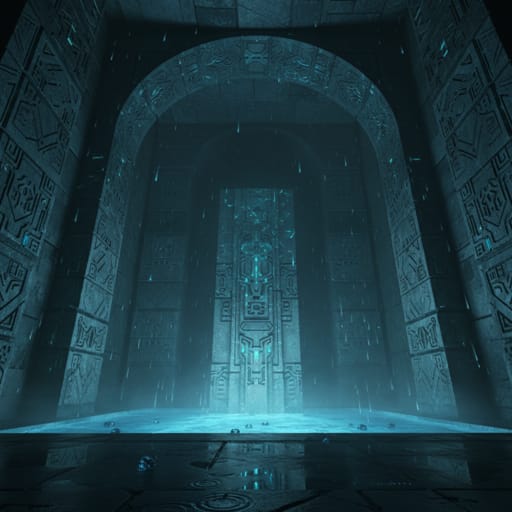
The Cryptoterrestrial Hypothesis (CTH)
The CTH proposes that UAP explanations could stem from intelligent beings present on Earth, rather than from distant galaxies. This “third minority class of hypothesis” is presented in the 2024 preprint “The Cryptoterrestrial Hypothesis” by Tim Lomas, Brendan Case (Harvard), and Michael P. Masters. While acknowledged as “highly exotic” and likely to be met with skepticism, the authors argue for its genuine consideration.
The CTH addresses the logistical and energetic challenges of interstellar travel inherent in the extraterrestrial hypothesis. By positing that these intelligences have always been on Earth, the need for vast cosmic journeys is eliminated, grounding the mystery closer to home, albeit in a concealed manner.
Four Primary Categories of Potential Cryptoterrestrials:
UAP Observations Supporting the CTH
The CTH offers potential explanations for baffling UAP characteristics, particularly “transmedium” capabilities—the seamless movement between air and water without sonic booms or splashes.
- USS Nimitz (2004): Objects descending from 80,000 feet to sea level instantly.
- USS Jackson (2023): UAPs emerging from the ocean near San Clemente Island.
- Navy Submariners: Reports of “USOs” (Unidentified Submersible Objects) moving at impossible speeds underwater.
Scientific Challenges & Skepticism
Despite its intrigue, the CTH faces massive scientific hurdles. Geology tells us the Earth’s mantle is too hot and pressurized for life. Logistics suggest a hidden civilization would generate detectable waste heat and resource signatures. Furthermore, the “Silurian Hypothesis” argues that any prior advanced civilization would have left a geological footprint (isotopes, plastics) that we have yet to find.
The authors themselves admit the theory is “in all likelihood false” but argue it merits investigation simply because the UAP phenomenon is too strange to rule out any earthly possibility.
Quiz: The Hidden Earth
Test your understanding of the Cryptoterrestrial Hypothesis
Editor’s Reflection
The Cryptoterrestrial Hypothesis is more than a fringe scientific theory; it is a psychological mirror reflecting our deepest existential anxieties. For decades, we have looked to the stars for “the others,” perhaps because distance feels safer. If the “aliens” are light-years away, we remain the masters of our own house. But if they are here—beneath our oceans, inside our caves, or walking among us—it triggers a primal territorial fear. It implies we are not the landlords of Earth, but merely the tenants living on the noisy surface.
This hypothesis also forces a pivot in our technological arrogance. We build telescopes to see the edge of the universe, yet we have mapped less of our ocean floor than the surface of Mars. The CTH suggests that our “blind spot” is not in the cosmos, but right under our noses. Whether these beings exist or not, the hypothesis itself is a valuable tool for humility. It reminds us that “scientific consensus” is a map, not the territory.
Curioscope invites you to consider: What is more terrifying? That we are alone in the universe, or that we have never been alone on Earth? The answer may require us to look down, not up.