
The Dyatlov Pass Incident: Russia’s Unsolved Mystery
A deep dive into one of history’s most perplexing and tragic cold cases.
The Ill-Fated Expedition: Plans and Departures
In the cold expanse of February 1959, a group of ten experienced ski hikers, students and graduates from the Ural Polytechnical Institute, embarked on what they anticipated would be a challenging yet rewarding Category III trek in the unforgiving Ural Mountains. Led by 23-year-old Igor Dyatlov, the group comprised Yuri Yudin, Yuri Doroshenko, Lyudmila Dubinina, Alexander Kolevatov, Zinaida Kolmogorova, Georgiy Krivonischenko, Rustem Slobodin, Nikolai Thibeaux-Brignolles, and Semyon Zolotaryov. Their ambitious objective was Mount Otorten, a name ominously translating from the local Mansi language to “Don’t Go There.” The chosen route also took them near Kholat Syakhl, or “Dead Mountain,” adding another layer of foreboding to their journey.
Early in the expedition, on January 28, 1959, an unexpected turn of events saw Yuri Yudin, one of the ten, withdraw from the trek due to a sudden onset of sciatica. This seemingly minor setback would inadvertently make him the sole survivor of the tragic events that unfolded. The group’s expected return to the village of Vizhay, and a subsequent telegram by February 12, became the critical marker for their safety. When this communication failed to materialize by February 20, a search party was promptly dispatched, signaling the beginning of an investigation into one of Russia’s most enduring mysteries.
The Discovery: A Scene of Utter Despair
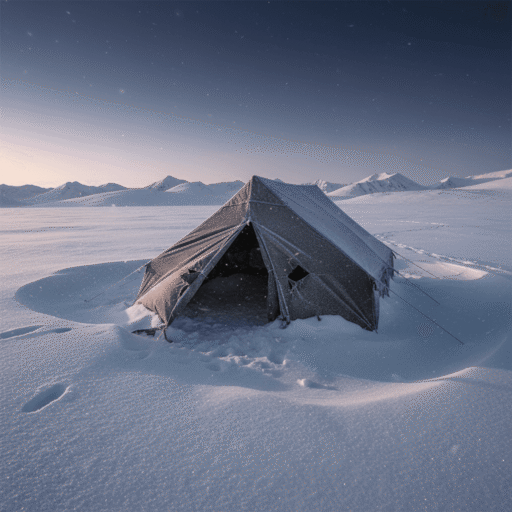
The initial discovery on February 26 sent shivers down the spines of the search party. On the eastern slope of Kholat Syakhl, partially obscured by snow, lay the group’s tent. Its condition immediately suggested a terrifying event: a large slash across its side, clearly cut from the inside. Inside, all of the group’s essential belongings—skis, boots, warm clothing, food, and personal diaries—were abandoned. This indicated a desperate and hasty departure, one where survival instinct seemingly overrode all logic.
Approximately 1.5 kilometers (0.9 miles) downhill from the tent, near a solitary cedar tree, the first two bodies were found. Yuri Doroshenko and Georgiy Krivonischenko lay partially clad, in stark contrast to the brutal -25°C to -30°C (-13°F to -22°F) temperatures. They wore only underwear and socks, a baffling choice given the extreme cold. A small campfire had been attempted nearby, and disturbing evidence of struggle was present: branches on the cedar tree were broken up to five meters high, suggesting someone had desperately climbed it, perhaps seeking refuge or a vantage point. Both bodies exhibited severely burned hands, adding another grim detail to the unfolding horror.
Further discoveries were made between the cedar tree and the tent, revealing a tragic attempt to return to the perceived safety of their shelter. Here, the bodies of Igor Dyatlov, Zinaida Kolmogorova, and Rustem Slobodin were found. While somewhat better dressed than the first two, their clothing was still woefully inadequate for the extreme conditions. Dyatlov had a distinct cut on his hand, and Slobodin presented a non-fatal cracked skull. Their poses and trajectories suggested an agonizing struggle, battling either the elements or an unseen, formidable threat as they tried to reach their abandoned tent.
The Unsettling Findings of the Investigation
The most disturbing revelations came later, on May 4, 1959, when the remaining four bodies were discovered. Lyudmila Dubinina, Alexander Kolevatov, Nikolai Thibeaux-Brignolles, and Semyon Zolotaryov were found in a ravine, about 75 meters (250 feet) deeper into the forest, buried under four meters of snow. Their injuries were unlike anything previously encountered and defied conventional explanation.
- **Lyudmila Dubinina:** Found kneeling in a stream, she was missing her eyes, tongue, and significant facial tissue.
- **Alexander Kolevatov:** His head was severely deformed, a piece of his skull was missing, and he suffered numerous internal injuries.
- **Nikolai Thibeaux-Brignolles:** A severe fractured skull was noted.
- **Semyon Zolotaryov:** He had multiple fractured ribs.
These were not ordinary injuries. The severe internal trauma – skull and rib fractures – were likened to those sustained in high-impact car crashes, yet remarkably, there were no external wounds or clear signs of blunt force trauma that would account for such damage. This anomaly became a central pillar of the mystery.
Adding to the enigma were other unusual findings. Some of the hikers’ clothing contained traces of radiation, though at the time, the levels were deemed inconclusive. Furthermore, the skin of several bodies displayed an unusual orange or brownish hue, a detail that has puzzled investigators and theorists for decades. The official conclusion from the initial medical report cited hypothermia for most of the group. However, for the four found in the ravine, the cause of death was chillingly recorded as “fatal compelling unknown force.” The case was swiftly closed in May 1959 by investigator Lev Ivanov, with all case materials classified as “secret,” deepening the shroud of suspicion and speculation around the incident.
The Avalanche Theory: A Rational Explanation?
Among the myriad theories, the avalanche theory offers a seemingly rational, albeit debated, explanation. This premise suggests that a rare, delayed-action slab avalanche struck the tent, forcing the hikers into a panicked, immediate escape. Proponents argue this accounts for the tent being cut from the inside, the desperate flight, and ultimately, deaths from hypothermia.
The severe internal injuries, particularly of those found in the ravine, are attributed to being crushed by the snow or falling into the deep ravine in their frantic flight. The fact that these bodies were found buried under several meters of snow lends credence to this part of the theory. Supporting research, notably a 2021 paper by Johan Gaume and Alexander Puzrin, employed simulations to demonstrate how a specific type of avalanche could have occurred. They posited that a weak snow layer, a strategically cut slope by the hikers, and the unique conditions of katabatic winds could have triggered such an event, even on a seemingly gentle slope.
However, the avalanche theory is not without its significant counter-arguments. Critics point to the distinct lack of typical avalanche signs, such as a debris cone, and question the feasibility on a slope not generally considered steep enough for a substantial slab avalanche. Furthermore, footprints found leading away from the tent showed no signs of being swept by snow, suggesting an orderly, albeit rushed, walk. The most perplexing questions remain: why did the hikers abandon all their warm clothing and essential gear? This is particularly baffling for experienced mountaineers. The theory also struggles to fully explain the scant clothing of the first discovered bodies, the mysterious internal injuries without corresponding external trauma, the radiation traces, and the unusual orange skin discoloration. These anomalies continually challenge the completeness of the avalanche explanation.
Other Prominent Theories: A Labyrinth of Speculation
The enduring gaps in the official narrative have spawned a labyrinth of other theories, each attempting to piece together the terrifying puzzle:
- Infrasound Theory: This theory posits that localized infrasound – inaudible low-frequency sound generated by winds interacting with the mountain’s topography – could have induced intense feelings of panic, terror, and disorientation among the hikers. Such an overwhelming sensory experience could lead to irrational flight, compelling them to abandon their tent and succumb to hypothermia, unable to think rationally.
- Military Testing/Secret Weapon Theory: One of the most persistent and unsettling theories involves the Soviet military. It suggests the area might have been a testing ground for experimental weapons, such as low-yield atomic bombs or advanced parachutes. The hikers, it is argued, either stumbled upon a secret test or were caught in its aftermath. Supporting “evidence” includes reports of “fireballs” or glowing spheres observed in the sky by other groups in the region, the enigmatic radiation traces on some clothing, and the internal injuries without external marks, which could potentially be explained by blast trauma from a pressure wave. The swift classification of case materials and the general Cold War secrecy only fuel this line of speculation.
- Mansi Attack Theory: Initially considered, this theory suggested an attack by the indigenous Mansi people, who regarded the area as sacred. However, it was quickly dismissed due to a lack of any evidence of other people at the scene, no external signs of struggle around the tent, the generally peaceful nature of the Mansi, and the injuries found not aligning with typical attack patterns.
- Paradoxical Undressing: This phenomenon, associated with severe hypothermia, suggests that as individuals reach a critical stage of freezing, they can experience a sensation of intense heat, leading them to shed their clothes. While this could explain the scant clothing of some victims, it fails to account for the other complex anomalies, such as the severe internal injuries or radiation.
- Yeti/Cryptid Attack Theory: On the more speculative end, some theories propose an attack by a large, unknown creature, such as a Yeti or other cryptid. This is offered as a way to explain the immense internal injuries without external struggle marks, implying a powerful, non-human assailant. However, concrete evidence for such a creature remains entirely absent.
- G-Force/High Altitude Winds: Another hypothesis involves extreme localized pressures or G-forces generated by specific wind patterns and topography, potentially causing the internal injuries. This theory is scientifically debated and lacks widespread acceptance.
The Unanswered Questions and Enduring Legacy
Decades later, the Dyatlov Pass Incident remains a multi-faceted puzzle, steadfastly resisting easy answers. The persistent mysteries continue to fuel its enduring fascination:
- Why was the tent cut from the inside, suggesting an urgent need to escape?
- Why did experienced hikers abandon all their warm clothing, food, and vital supplies in sub-zero temperatures?
- What caused the severe internal trauma to four of the victims without any corresponding external marks or signs of struggle?
- What is the significance, if any, of the radiation traces found on some clothing?
- What caused the strange skin discoloration observed on several bodies?
A new Russian investigation in 2019-2020 largely reaffirmed the avalanche theory as the primary cause, forcing a panicked escape. It further cited katabatic winds and the ravine as a perceived, albeit fatal, shelter. While this aligns with Gaume and Puzrin’s scientific findings, it still struggles to definitively reconcile every single detail and anomaly of the original incident, leaving many questions lingering.
The Dyatlov Pass Incident has transcended a mere historical tragedy to become a modern myth, a testament to nature’s formidable power and the human quest to comprehend the inexplicable. It serves as a chilling cautionary tale for adventurers and a fascinating battleground where scientific analysis confronts paranormal speculation. The sheer desperation and panic observed in the victims’ actions remain a consistent thread across nearly all plausible theories, suggesting an overwhelming, sudden threat.
The role of Semyon Zolotaryov, the oldest and most enigmatic member of the group, adds another layer of intrigue. His mysterious presence and reported connections fuel speculation, particularly within the military testing theory, suggesting he might have possessed knowledge or involvement in sensitive activities. Ultimately, the truth remains tantalizingly out of reach, shrouded forever in the relentless snows of the Ural Mountains – a grim, silent monument to nine lost lives and an enigma that continues to captivate the world.
Test Your Knowledge: The Dyatlov Pass Quiz
See how well you’ve absorbed the mysteries of the Dyatlov Pass Incident. Choose ‘True’ or ‘False’ for each statement.