
The Unsettling Symphony of
Strasbourg
In the summer of 1518, hundreds of people began to dance. They didn’t stop until they died. Why?
Curioscope’s Lens
History is often written in battles and treaties, but sometimes it is written in madness. The Dancing Plague of 1518 stands as one of the most bizarre and terrifying episodes in human history. It wasn’t a virus or a bacteria that ravaged Strasbourg; it was a contagion of the mind. Under the crushing weight of famine, disease, and superstition, the collective psyche of a city snapped, manifesting a nightmare where joy’s most primal expression—dance—became an instrument of death. This is not just a story of the past; it is a mirror reflecting the fragility of human sanity when pushed to the brink.
Part I: The Spark in the Heat
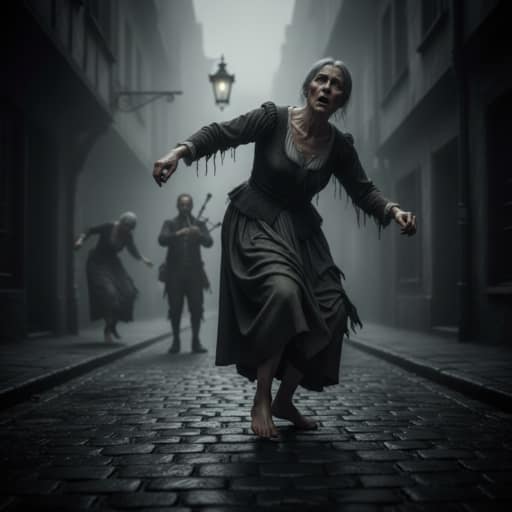
It began on a stifling mid-July day, under the oppressive heat of the Alsatian summer. A woman known as Frau Troffea stepped out of her humble home into a narrow, cobblestone street in Strasbourg. There was no music playing. There was no festival. Yet, she began to dance.
This was not a graceful waltz or a joyful jig. Observers described her movements as jerky, convulsive, and devoid of pleasure. Her face did not show joy, but a mask of strained concentration and agony. Her husband, humiliated and terrified, reportedly begged her to stop, but she seemed not to hear him. She danced for hours until she collapsed from exhaustion, twitching in the dirt. But the moment she regained a shred of strength, she pulled herself up and began again. She danced through the night and into the next day. By the third day, her shoes were soaked in blood, her feet raw and blistered.
The horror was contagious. Within a week, 34 others had joined her, abandoning their work and families to join the macabre display. By August, the number had swelled to 400. This wasn’t a flash mob; it was an epidemic of compulsion. Witnesses described the dancers as being in a trance-like state, screaming for mercy, begging for the dance to stop, even as their own limbs refused to obey.
The Toll of the Trance
At its peak, the plague claimed up to 15 lives per day. Men, women, and children collapsed from heart attacks, strokes, and sheer physical exhaustion. The city streets became an open-air morgue of the exhausted living and the dancing dead. The summer heat exacerbated dehydration, turning the city into a cauldron of delirium.
Part II: The Cure That Killed
The city council of Strasbourg, the Magistrat, was thrown into chaos. They consulted the best medical minds of the era—guild physicians and alchemists. The diagnosis? “Overheated Blood.”
According to the prevailing humoral theory, the dancers’ brains were overheated, causing madness. The prescribed cure remains one of history’s most tragic ironies. The doctors reasoned that the victims needed to “shake the fever out” of their systems. They didn’t need rest; they needed more dancing.
Authorities cleared a grain market to create a dance floor. They built a wooden stage. In a fatal error of judgment, they hired professional pipers and drummers to keep the beat, believing the rhythm would help the afflicted cure themselves. It was a catastrophic mistake. The music didn’t cure the afflicted; it acted as a super-spreader event.
For the susceptible onlookers—already stressed, hungry, and fearful—seeing the spectacle and hearing the relentless drumbeat triggered the psychological switch. The music drew them in like moths to a flame. What was meant to be a cure became a death sentence, amplifying the hysteria and drawing hundreds more into the deadly spiral.
Part III: A Perfect Storm of Despair
Why Strasbourg? Why 1518? To understand the madness, we must look at the context. It was a time of apocalyptic dread.
- 1Famine & The ‘Bad Bundschuh’ A succession of bitter frosts and failed harvests had led to severe starvation. The price of grain had skyrocketed. Orphanages were overflowing. Simmering beneath this was the ‘Bundschuh’ movement—a series of peasant revolts that created an atmosphere of political terror and instability.
- 2New Diseases Syphilis, a new and terrifying disease brought back from the Americas, was ravaging Europe. Smallpox and leprosy were constant companions. The population was physically weak and mentally traumatized by the constant presence of death.
- 3The Curse of St. Vitus Perhaps most importantly, the locals believed in St. Vitus, a Christian martyr. Legend held that if angered, he would inflict a plague of compulsive dancing on sinners. This cultural belief provided the “script” for their subconscious. When stress broke their minds, they acted out the very curse they feared most.
Part IV: The Diagnosis
Modern science categorizes this event as Mass Psychogenic Illness (MPI), or mass hysteria. It occurs when a group of people, under extreme physiological and psychological stress, manifest physical symptoms that spread through social contact.
Some theories have suggested Ergotism (poisoning from moldy rye bread, containing the chemical basis of LSD) as a cause. Ergot can indeed induce hallucinations and spasms. However, ergotism restricts blood flow, often leading to gangrene and the loss of limbs. It makes movement agonizingly painful. The supernatural stamina of the Strasbourg dancers—who leaped and twirled for days on bloody feet—points away from biological poisoning and towards a powerful, trance-like psychological state where the mind overrides the body’s pain signals.
The plague finally ended not with medicine, but with faith. Realizing their mistake, the city banned the music and transported the afflicted to a shrine of St. Vitus in the mountains. There, they were given red shoes and performed a ritual of penance. For many, the ritual worked. Their minds, seeking absolution, accepted the cure just as they had accepted the curse.
History or Hysteria? Test Your Knowledge
Can you separate the facts from the fever dream?
Editor’s Reflection
The Dancing Plague of 1518 haunts me. Not because of the death toll—history is full of massacres with higher counts—but because of the method. Dance is supposed to be the ultimate expression of life, joy, and freedom. To see it twisted into a macabre instrument of torture, a prison of the body, is a profound violation of our nature. It reminds us that under enough pressure, the human mind doesn’t just crack; it creates its own terrifying reality to escape the one it cannot bear.
We often look back at medieval people and judge their superstitions. We laugh at the idea of St. Vitus. But are we so different? The people of Strasbourg were crushed by forces they couldn’t control—famine, plague, poverty, political unrest. They had no outlet for their despair, so their bodies screamed what their mouths could not. Today, we have our own versions of mass hysteria, our own social contagions born of anxiety, algorithm-fueled anger, and uncertainty. We may not be dancing in the streets until our feet bleed, but we are certainly not immune to the madness of the crowd.
The decision of the city council to hire musicians is the tragic irony at the heart of this tale. It teaches us a timeless lesson about leadership and crisis: sometimes, the solution is the accelerant. By validating the madness, by giving it a stage and a beat, they amplified it. It forces us to ask a difficult question about our modern crises: Are we extinguishing the fires, or are we just playing the drums?
Curioscope invites you to listen to the silence after the music stops. The Dancing Plague wasn’t just a historical oddity; it was a scream for help that echoed for 500 years. It reminds us that the most dangerous plagues are not the ones that attack our bodies, but the ones that hijack our hope.
The Enigma Underfoot: Decoding the Enduring Mystery of the Toynbee Tiles