
The Khamar Daban
Incident
In 1993, six experienced hikers died violently in the Siberian mountains. One survived to tell a story that defies logic.
Curioscope’s Lens
The wilderness is often romanticized as a place of beauty and solitude, but it is also a realm of profound indifference. In the annals of unexplained deaths, the Dyatlov Pass incident reigns supreme, yet a lesser-known tragedy in 1993 bears an even more terrifying signature. The Khamar Daban incident isn’t just about death; it’s about the manner of death. Bleeding from the eyes, foaming at the mouth, tearing at their own clothes—the symptoms described by the sole survivor paint a picture of a biological or chemical nightmare rather than simple hypothermia. This article peels back the layers of official reports to confront the unsettling question: What really happened on that mountain?
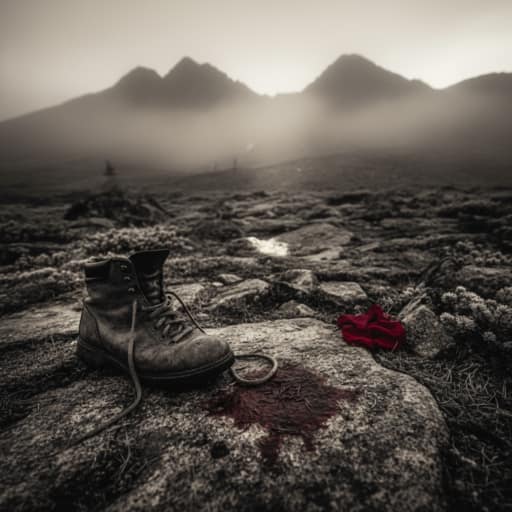
Part I: The Expedition into the Unknown
It was supposed to be a routine trek. In August 1993, a group of seven hikers arrived in the Khamar-Daban mountain range, a wild and beautiful region near Lake Baikal in southern Siberia. They were not amateurs. They were led by Lyudmila Korovina, a 41-year-old master hiker known for her toughness and experience. The group consisted of six of her students, ranging in age from 15 to 24. They were fit, prepared, and familiar with the terrain.
The weather forecast promised clear skies, but the mountains are fickle. On August 5th, a cold front slammed into the range, bringing freezing rain and snow. Korovina made a decision that would later be scrutinized: instead of descending to the treeline for shelter, she ordered the group to camp out in the open on an exposed ridge. Perhaps she wanted to test their endurance. Perhaps she underestimated the storm. It was a fatal miscalculation, but it doesn’t explain the horror that followed.
Part II: The Descent into Madness
The only reason we know what happened next is because of 17-year-old Valentina Utochenko. Her testimony is the stuff of nightmares. According to Valentina, the morning of August 5th began with the group packing up to leave. Suddenly, the strongest male hiker, 23-year-old Alexander Krysin, collapsed.
A Cascade of Horror
“Sasha began to scream,” Valentina recalled. “He was foaming at the mouth and bleeding from his ears. He asked me to take everyone away.” Korovina, the leader, ran to help him, but she too began to exhibit the same terrifying symptoms—choking, convulsions, and bleeding.
Panic erupted. One by one, the other hikers succumbed to a sudden, violent psychosis. Tatyana Filipenko began tearing at her clothes and bashing her head against rocks. Viktoriya Zalesova and Timur Bapanov ran away, vomiting blood and clawing at their own throats. It was as if an invisible wave of death was washing over them. Valentina, terrified and alone, grabbed a sleeping bag and ran down the mountain. She was the only one who didn’t look back.
Part III: The Official Verdict vs. The Evidence
When rescuers finally found the bodies weeks later, the autopsy results were bafflingly mundane. The official cause of death was listed as hypothermia, with Korovina suffering a heart attack. Malnutrition was cited as a contributing factor.
But the forensic details tell a different story. All the deceased had bruised lungs and signs of internal hemorrhaging. While hypothermia can cause “paradoxical undressing” (where victims feel hot and strip off clothes), it does not cause bleeding from the eyes or ears. It does not cause mass psychosis or violent convulsions in a matter of minutes. The official explanation feels like a cover-up, or at best, a gross oversimplification of a complex medical event.
Part IV: Theories from the Abyss
If not hypothermia, then what? The theories range from the plausible to the conspiratorial.
- 01Nerve Agents The symptoms described—foaming mouth, convulsions, respiratory distress—mimic the effects of nerve agents like Novichok. Was the group an accidental victim of a secret military test gone wrong?
- 02Toxic Infrasound Infrasound is a low-frequency sound wave often generated by wind interacting with mountain topography (Karman vortex street). At high intensities, it can cause dread, nausea, and even damage internal organs. Could a “perfect storm” of wind have vibrated their bodies to death?
- 03Chemical Contamination Some suggest they drank water contaminated by toxic waste or poisonous mushrooms. However, a toxin that kills six people almost simultaneously while sparing one seems statistically improbable.
The Final Verdict: True or False
Separate the forensic facts from the Siberian myths.
Editor’s Reflection
We live in an age of information where we expect every question to have an answer. We expect GPS to find us, medicine to cure us, and science to explain the inexplicable. The Khamar Daban incident is a terrifying reminder that the world is not always rational, and nature is not always kind.
The official explanation of “hypothermia” feels like a bureaucratic band-aid over a gaping wound. It is a safe answer, a logical answer, but it fails to account for the sheer visceral horror of Valentina’s testimony. It asks us to ignore the bleeding eyes, the madness, the simultaneous collapse. It asks us to believe that six healthy young people simply froze to death while acting like they were possessed.
This story haunts me because it strips away the illusion of safety. It suggests that there are pockets of this world where the rules of biology and physics warp, where a wrong turn or a shift in the wind can lead to a death so strange it defies categorization. Valentina Utochenko survived, but one has to wonder if she ever truly left that mountain.
Curioscope invites you to respect the silence of the high peaks. The mountains keep their secrets well, and sometimes, the only thing they give back is the wind.
The Isdal Woman Mystery of Norway’s Ice Valley: Unraveling the Never-Ending Enigma