
The Circleville Letters: An Enduring Shadow of Anonymous Terror
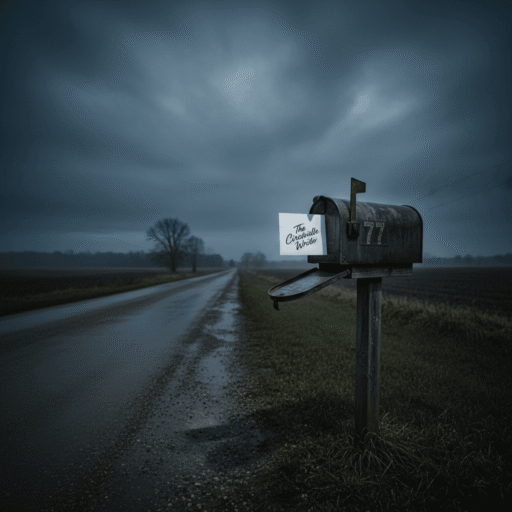
The Circleville Letters represent one of America’s most bizarre and enduring unsolved mysteries. For nearly two decades, anonymous, menacing communications terrorized the residents of Circleville, Ohio, sparking paranoia, leading to a suspicious death, and even a wrongful conviction. This article delves into the unsettling saga of fear, suspicion, and unanswered questions that cast a long shadow over the quiet town.
The Unsettling Dawn: When Circleville Became a Target
In 1977, Circleville, Ohio, a town previously known for its tranquility, found itself under siege by an unseen enemy. Anonymous letters, often typed or meticulously handwritten, began arriving with disturbing regularity. These communications were not mere nuisances; they revealed intimate details and made shocking accusations, suggesting the author possessed extensive knowledge of recipients’ private lives. The chilling implication was clear: the writer was a local, lurking within their very community.
While the postmarks frequently indicated Columbus, Ohio, approximately 25 miles away, this was widely perceived as a deliberate diversion, designed to throw investigators off the scent. Initial targets varied, encompassing various residents with seemingly random grievances. However, the focus soon narrowed dramatically to Mary Gillispie, a local school bus driver, and Gordon Massie, the school district superintendent, both accused of engaging in an illicit affair.
The letters sent to Mary were particularly cruel, detailing specific times and places, taunting her with the alleged affair, and using knowledge of her children for psychological intimidation. The sheer audacity and precision of the information contained within these letters created an atmosphere of profound distrust and fear, tearing at the fabric of the close-knit community.
The Shadow Deepens: Ron Gillispie’s Suspicious Death
The escalating terror took a tragic turn when Mary Gillispie’s husband, Ron Gillispie, became a direct target. He began receiving threatening letters warning him to end his wife’s alleged affair, escalating the personal stakes dramatically. The anonymous writer seemed to delight in stirring marital discord and pushing individuals to their breaking point.
On the evening of August 19, 1977, a fateful event unfolded. Ron reportedly received a mysterious phone call after which, visibly agitated, he took his gun and drove off, presumably to confront the elusive letter writer. Hours later, Ron was found dead; his truck had crashed into a tree. Investigators, quick to close the case, initially ruled it an accident, attributing it to drunk driving. The official narrative seemed straightforward, but beneath the surface, doubts simmered.
Ron’s brother-in-law, Paul Freshour, and other skeptical community members immediately suspected foul play. They pointed to critical inconsistencies: Ron’s gun had been fired, a detail that clashed with the accidental death theory. Why would a man involved in a car crash fire his weapon? Furthermore, the emergence of new letters after Ron’s death, accusing Sheriff Dwight Radcliff of a cover-up, only served to deepen community distrust and fuel suspicions of official negligence or complicity. The lack of a thorough investigation into the possibility of murder in Ron’s death remains one of the most significant unanswered questions of the entire mystery.
Escalation and the Booby Trap: The Net Closes In
Despite Ron Gillispie’s death, the anonymous letters continued their relentless assault, demonstrating a terrifying persistence. The campaign escalated beyond mere psychological torment, venturing into the realm of physical danger. In 1983, a horrifying discovery was made: Mary Gillispie found a meticulously crafted booby trap on her school bus. A loaded .22 caliber pistol had been rigged to fire when the bus door was opened, narrowly missing its target.
The investigation into this attempted murder quickly led to a prime suspect: Paul Freshour, Ron Gillispie’s brother-in-law. Freshour was a convenient target; the gun used in the booby trap was traced directly back to him. Despite his fervent claims that his gun had been stolen and his persistent assertions of innocence, the evidence mounted against him. His estranged wife, Karen Sue Freshour, provided damaging testimony, stating that Paul was angry at Mary and believed she was having an affair. She also claimed to have found torn-up pieces of the anonymous letters in their home, implicating him further.
A polygraph test, though controversial in its reliability, indicated that Freshour was being deceptive. A handwriting expert also claimed to find similarities between Paul’s writing and the anonymous letters. Based on this circumstantial evidence and testimony, in 1984, Paul Freshour was convicted of attempted murder for the booby trap and sentenced to a lengthy 7-25 years in prison. Many believed the terror was finally over.
An Unsettling Continuation: Letters from Behind Bars
Just when the community believed justice had been served, the mystery of the Circleville Letters took an astounding and chilling turn. Despite Paul Freshour’s imprisonment, hundreds more anonymous letters continued to arrive in Circleville. This unsettling continuation immediately cast a profound doubt on Freshour’s guilt. How could a man incarcerated and allegedly isolated within prison walls continue such a prolific campaign of terror?
Prison authorities, including the warden, confirmed Freshour’s isolation, making it seemingly impossible for him to send the letters. The continuation of the letters while Freshour was behind bars ignited two primary theories: either the true writer was still at large, a master manipulator who had successfully framed an innocent man, or a conspiracy of multiple individuals was involved, ensuring the campaign’s longevity irrespective of who was imprisoned.
Adding another layer of macabre irony, Paul Freshour himself received a letter in prison, addressed to him from “The Circleville Writer.” The letter chillingly stated the author’s intent to keep him imprisoned, an act of psychological warfare that deepened the mystery and cemented the belief for many that Freshour was indeed innocent, a pawn in a larger, more sinister game.
A Web of Theories: Who Was the Circleville Writer?
The enduring mystery has given rise to numerous theories, each attempting to unmask the elusive Circleville Writer:
- The True Writer at Large: This theory posits that the actual perpetrator was never caught. A master of manipulation and anonymity, they continued their campaign even after Freshour’s conviction, possibly finding perverse satisfaction in his wrongful imprisonment.
- Multiple Perpetrators: The varying styles and sheer volume of the letters over two decades suggest a conspiracy. Perhaps a group of individuals with shared grievances or a desire for control was involved, making it difficult to pinpoint a single culprit.
- David Longberry: Another school bus driver, Longberry was rumored to harbor unrequited feelings for Mary Gillispie. This theory suggests he might have sought revenge or to eliminate rivals, directing the letters to destabilize her life and relationships.
- Karen Sue Freshour: Paul Freshour’s estranged wife, who testified against him, is also a suspect. This theory suggests she might have framed him, possibly out of revenge for his alleged infidelity, or to cover her own involvement in the letter-writing campaign. Her testimony was pivotal in his conviction.
- Other Unseen Hands: The possibility remains that other individuals within the community, driven by personal grudges, a desire for control, or simply a twisted sense of amusement, could have been involved, either as the primary writer or as accomplices.
Paul Freshour’s Release and the Silence
Paul Freshour steadfastly maintained his innocence throughout his decade-long imprisonment. He consistently appealed his conviction, asserting he was a victim of a frame-up. Finally, in 1994, he was paroled, a free man once more.
Remarkably, upon his release, the anonymous letters that had plagued Circleville for so long abruptly stopped. This sudden cessation led many to conclude that Freshour must have been the culprit all along. For them, the timing was too coincidental to ignore. However, his supporters argued that the cessation was merely another calculated move by the true writer; with Freshour out of prison, there was no longer a need to continue the campaign as a means to keep him incarcerated and deflect suspicion. Paul Freshour died in 2012, taking his assertions of innocence with him to the grave.
The Enduring Ambiguity: Forensic Examinations and Unresolved Questions
Years after Freshour’s death, reports surfaced of further handwriting analysis, which reportedly found some similarities between his writing and the anonymous letters. However, even these later examinations were not considered definitively conclusive, highlighting the pervasive ambiguity of the case. The Circleville Letters case remains officially unsolved, a testament to the lack of definitive evidence, the reliance on circumstantial testimony, and the perpetrator’s masterful command of anonymity.
The mystery of the Circleville Letters serves as a haunting cautionary tale. It illustrates the destructive power of anonymous communication, its ability to erode trust within a community, and the devastating, long-lasting impact of fear and paranoia. It stands as one of America’s most bizarre and enduring unsolved mysteries, a chilling narrative with no definitive resolution, leaving only a shadow of terror in its wake.
The Buzzer’s Enigma: Unraveling the 40-Year Mystery of UVB-76, Russia’s Ghost Radio